AI Rest Tracking: 2-Minute Check-Ins That Improve Sleep

What “better rest” looks like in practice
“Better rest” is easier to improve when it’s defined in observable terms. Start by separating sleep quantity from sleep quality. Quantity is your total sleep time; quality is how restored you feel in the morning and how steady your energy is throughout the day.
In practice, good progress often shows up as consistency signals: a steadier wake time (even after a rough night), fewer nighttime awakenings, and fewer unpredictable afternoon crashes. Instead of chasing perfection, set one simple marker for the next seven days—something you can notice without special devices. For example: “fall asleep within a comfortable window,” “wake up fewer times,” or “feel less groggy before lunch.”
The key is keeping your daily record short enough that you’ll actually do it. A “realistic” log done 6 days a week beats an elaborate system you abandon by Wednesday.
The few data points that matter most
Most rest patterns become visible with a handful of inputs. Aim for quick morning ratings (rested score, mood, grogginess), a short night summary (bedtime, estimated time to fall asleep, awakenings, wake time), and a few daytime factors that commonly move the needle (caffeine timing, alcohol, late meals, naps, exercise, stress, and screens near bedtime). Add context only when something unusual happens: travel, illness, a medication change, or a major emotional event.
Approximate values are usually enough. “Last caffeine around 2 pm” can be as useful as an exact minute when you’re comparing trends over weeks.
Rest tracking fields that work well with AI summaries
| Field | How to record (quick) | Why it helps | Example entry |
|---|---|---|---|
| Rested score (1–10) | One number on waking | Tracks perceived recovery over time | 7/10 |
| Bedtime / wake time | Clock times | Anchors circadian consistency and schedule effects | 11:20 pm / 7:10 am |
| Time to fall asleep | Estimate in minutes | Highlights winding-down effectiveness | 25 min |
| Awakenings | Count + brief cause if known | Identifies fragmentation triggers | 2 (heat, bathroom) |
| Caffeine timing | Last caffeine time | Strongly influences sleep onset for some people | Last coffee: 1:30 pm |
| Alcohol | Drinks + timing | Can worsen sleep quality later in the night | 2 drinks at 8 pm |
| Exercise | Type + time | Can improve sleep; timing can matter | Walk 30 min at 6 pm |
| Late meal | Time + heaviness | May affect reflux, temperature, comfort | Dinner 9:15 pm (heavy) |
| Stress level (1–10) | One number + short note | Links arousal and rumination to sleep | 8 (deadline) |
| Nap | Duration + end time | Impacts sleep pressure at night | 20 min, ended 3:40 pm |
Set up an AI-assisted daily check-in (under 2 minutes)
Pick one capture method you’ll stick with: a notes app, a simple spreadsheet, or a quick form. Consistency matters more than the tool. Use two check-ins: a morning log for outcomes (how the night felt) and an evening log for inputs (what might influence tonight).
To make summaries more accurate, use the same labels each day (for example: “Rested score:”, “Bedtime:”, “Wake time:”, “Caffeine last:”, “Stress:”). That structure makes it easier to scan your own notes—and easier for AI to spot patterns such as “late caffeine” or “heavy dinner” showing up before worse nights.
Keep the evening check-in focused on controllables: caffeine cutoff, your wind-down plan, light exposure, meal timing, and a quick stress decompression step. If you use a wearable, consider adding only one or two metrics (like total sleep time and awakenings) so your log doesn’t turn into a data backlog.
Weekly pattern review: turning notes into decisions
Simple adjustments that often improve rest
For foundational sleep guidance, the CDC sleep resources and the NIH guide to healthy sleep are solid references for routines and habits worth testing.
Using AI responsibly for personal health tracking
Treat AI output as pattern suggestions—starting points for experiments—rather than diagnoses. If you have persistent insomnia, loud snoring with daytime sleepiness, breathing pauses, or symptoms that affect safety or mental health, seek professional care. The American Academy of Sleep Medicine’s Sleep Education site is a useful place to learn what to bring up with a provider.
Tools that make the habit easier
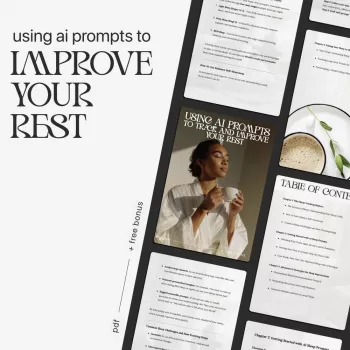
If you want a ready-made structure for consistent entries and quick weekly takeaways, Using AI Prompts to Track and Improve Your Rest can help streamline daily check-ins and weekly reviews so you spend less time formatting and more time noticing what actually changes outcomes.
When stress and setbacks are a recurring trigger for poor nights, a simple mindset framework can also support steadier routines. How to Learn and Grow from Mistakes – Digital Guide is designed to build follow-through after imperfect days, so one rough night doesn’t turn into a week-long spiral.
A ready-to-use template for faster tracking
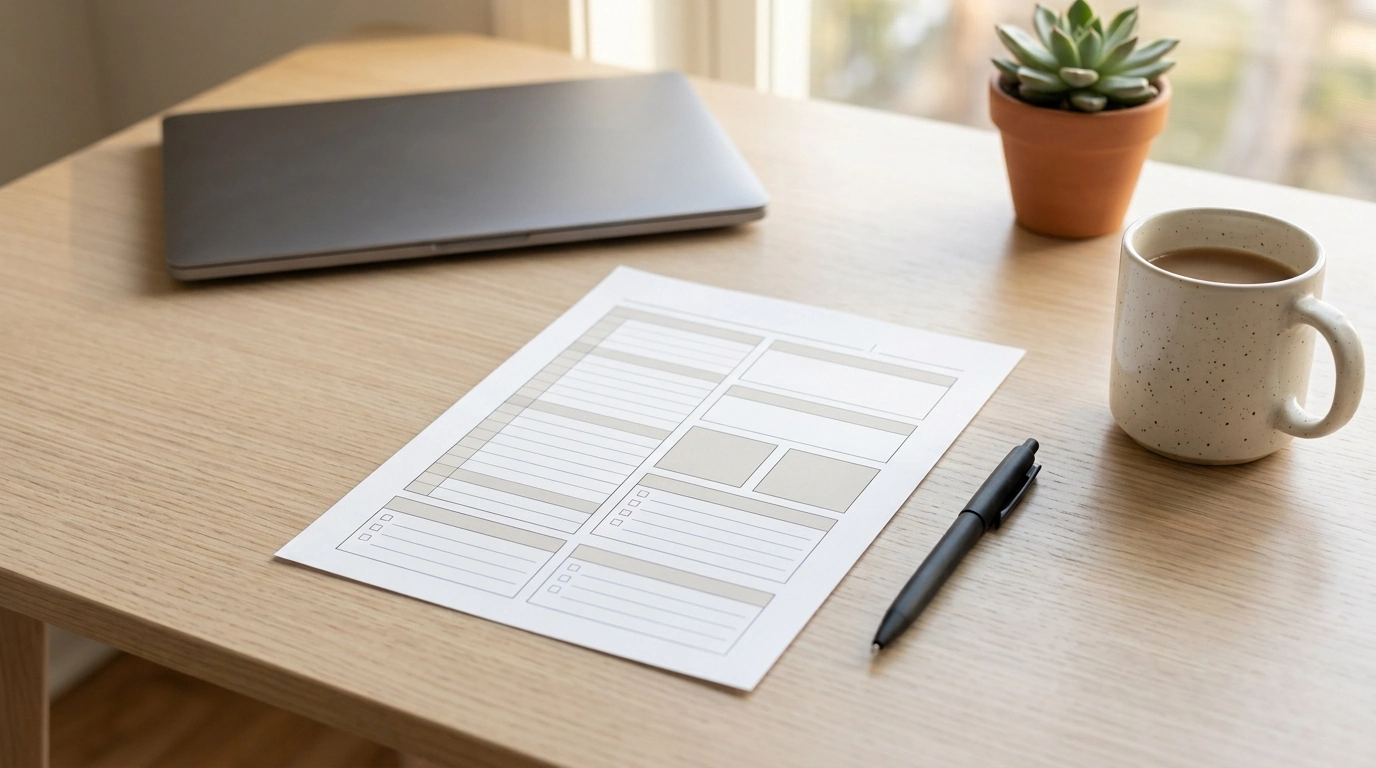
Daily template
| Morning check-in (copy/paste) | Evening check-in (copy/paste) |
|---|---|
|
Date: Rested score (1–10): Mood (1–10): Grogginess (low/med/high): Bedtime: Time to fall asleep (min): Awakenings (# + cause): Wake time: |
Caffeine last (time): Alcohol (drinks + time): Exercise (type + time): Dinner (time + light/medium/heavy): Nap (min + end time): Stress (1–10) + note: Wind-down plan (1 line): |
FAQ
How long does it take to notice patterns in rest tracking?
Many people notice early signals within 7–14 days, especially around caffeine timing, wake-time consistency, and late meals. Stronger confidence usually shows up after 3–4 weeks of steady entries across both weekdays and weekends.
What if the tracking itself makes it harder to fall asleep?
Keep evening logging under 60 seconds and do it earlier in the evening rather than at bedtime. Save analysis for a weekly daytime review so your brain doesn’t treat tracking as a nightly performance check.
Can wearable sleep scores replace a daily journal?
Wearables can be useful for timing trends, but they rarely capture the “why” behind changes. A short journal adds the context—caffeine, stress, meals, naps—that often explains why a score rises or drops.








Leave a comment