Gothic Floor-to-Ceiling Cat Tree: 5-Tier Tower
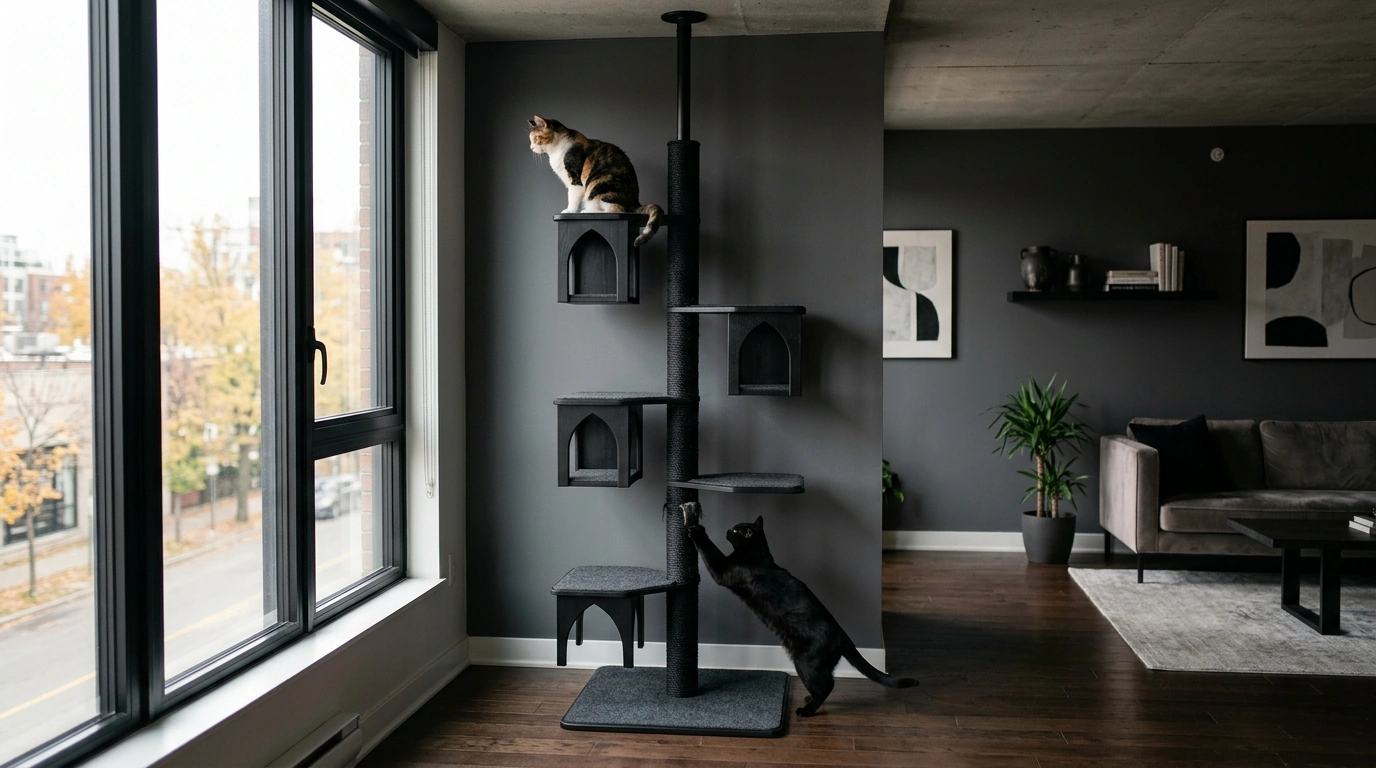
Gothic Floor-to-Ceiling Cat Tree: Adjustable 5-Tier Black Tower with Hammock & Scratching Posts
A floor-to-ceiling cat tree adds vertical territory without taking much floor space. This gothic-styled, adjustable 5-tier tower combines climbing levels, a hammock for lounging, and multiple scratching posts to help cats burn energy, nap up high, and keep claws busy away from furniture.
What Makes a Floor-to-Ceiling Cat Tree Different
Most cat trees are limited by their base size: bigger towers often mean a wider footprint. A floor-to-ceiling design flips that equation by using height instead of floor space, creating a tall “cat zone” that can fit neatly into a corner.
- Uses vertical height to create more climbing and perching space in small rooms.
- Stabilizes by bracing between floor and ceiling, helping reduce wobble compared with shorter free-standing towers.
- Encourages natural behaviors: climbing, surveying, stretching, scratching, and resting in elevated spots.
- Works well for households that want a dedicated cat area without expanding the footprint.
Cat-friendly home guidance often emphasizes enrichment and choice—places to perch, hide, scratch, and rest. Resources like the American Association of Feline Practitioners (AAFP) and the ASPCA highlight how environment shapes behavior, especially when indoor cats need safe outlets for energy and curiosity.
Design Highlights: Gothic Look, 5 Tiers, Hammock, Scratching Posts
Style matters when a tall cat tower becomes part of the room. This black, gothic-inspired look leans moody and modern, blending easily with darker interiors, minimalist spaces, or industrial décor.
- Dark, gothic-inspired styling that fits modern, moody, or minimalist décor.
- Five-tier layout creates a clear route upward so cats can hop between platforms instead of making one big jump.
- Hammock adds a flexible lounging spot that cradles the body and can become a favorite nap area.
- Multiple scratching posts distribute scratch zones across levels, making it easier to redirect scratching where it’s wanted.
The tiered “route” is especially helpful in daily life. Instead of leaping from the floor to a top bed in one move, cats can climb in short, confident steps—useful for cautious cats and for homes where cats like to chase each other upward during play.
Adjustable Floor-to-Ceiling Fit and Placement Tips
Because this style braces against the ceiling, placement is part of the performance. A little planning can make the tower feel sturdier and more inviting from day one.
- Measure floor-to-ceiling height before setup to confirm the adjustable range will work for the room.
- Position near a wall or in a corner for added confidence during energetic climbs.
- Avoid placing directly under fragile shelves, hanging frames, or ceiling fixtures where repeated jumping could cause vibration.
- If possible, place near a window for visual enrichment, but keep cords/blinds out of reach to reduce hazards.
- Check stability after assembly and re-check periodically, especially in homes with high-energy cats.
If the floor is slick (polished wood, laminate, tile), a thin non-slip mat under the base area can help reduce tiny shifts over time. The goal is for your cat to feel that every jump lands on something solid.
Best For: Single Cats, Multi-Cat Homes, Kittens, and Adults
Vertical space can reduce “traffic jams” and give cats more choices about where to be. That flexibility often shows up as calmer behavior, fewer ambushes in hallways, and less competition over a single favorite chair.
- Single cats: provides a reliable routine of climb–scratch–nap with a defined safe zone.
- Multi-cat homes: vertical spacing helps cats share territory with less crowding on the floor.
- Kittens: tiers support controlled practice of climbing and confidence-building (supervise early use).
- Adult and senior cats: a step-like layout can be easier; add a small ottoman or step nearby if needed.
- Cats that scratch furniture: multiple posts make redirection easier when paired with consistent training and rewards.
At-a-Glance Specs and Practical Notes
| Feature | Why it matters | What to verify before buying/setting up |
|---|---|---|
| Adjustable floor-to-ceiling brace | Helps keep the structure steady and tall | Ceiling height measurement; level flooring; placement near wall/corner |
| 5 tiers/platforms | Creates a climbing route and multiple perches | Tier spacing fits cat’s jump comfort; room clearance around the tower |
| Hammock | Adds a cozy resting spot and variety | Placement height suits cat’s confidence; fabric can be cleaned or maintained |
| Scratching posts | Redirects scratching away from furniture; promotes stretching | Scratch areas accessible on multiple levels; monitor wear over time |
| Black gothic styling | Aesthetic match with darker interiors | Fur visibility and cleaning routine; overall look in the intended room |
Assembly, Training, and Everyday Care
Common Setup Mistakes to Avoid
Recommended Picks (In Stock)
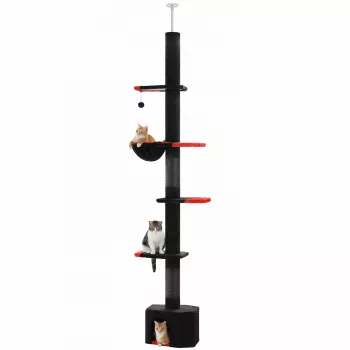
- Gothic Floor-to-Ceiling Cat Tree – Adjustable 5-Tier Black Cat Tower with Hammock & Scratching Posts
- How to Learn and Grow from Mistakes – Digital Guide | Mindset, Self-Growth & Resilience eBook
- 18K Gold Custom Alphabet Initial Necklace
FAQ
Will a floor-to-ceiling cat tree damage the ceiling?
Proper installation at the correct tension helps prevent damage, but it’s important to follow the included instructions and avoid bracing against fragile ceiling materials. Re-check tightness periodically so the tower stays stable without over-tightening.
Is a 5-tier tower suitable for two cats?
It can be, because vertical space gives cats more ways to share territory without crowding each other. Watch how they take turns, and support harmony with additional resources like extra litter boxes, water stations, and resting spots elsewhere in the home.
How do cats learn to use the hammock?
Start by luring your cat with treats or a toy and rewarding any investigation of the hammock. Adding a familiar blanket or a fabric that smells like home can help, and placing the hammock at a confidence-friendly height early on can speed up acceptance.








Leave a comment