1.6HP Dust Collector for Sandblasting Cabinets: Clearer View
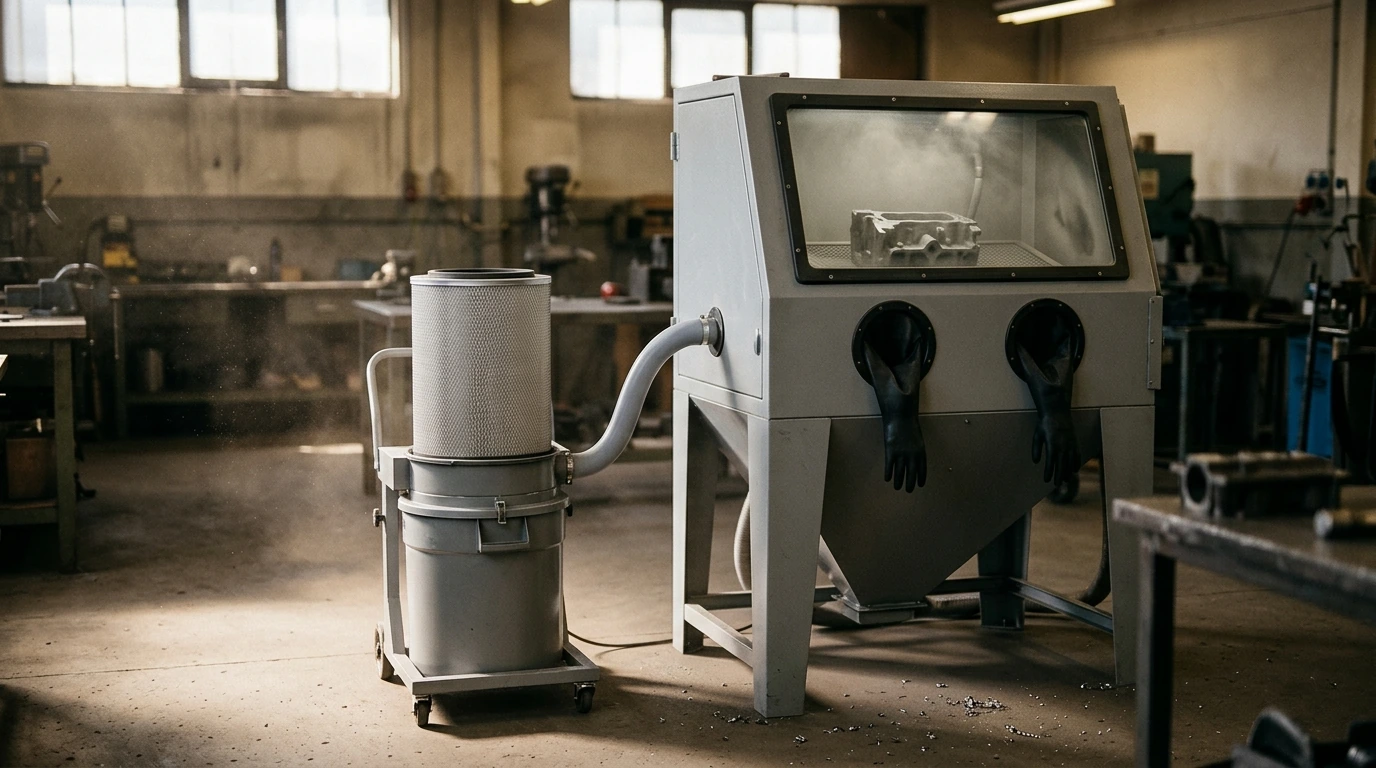
1.6HP Dust Collection System for Sandblasting Cabinets: Cleaner Visibility, Better Media Control
A dedicated dust collector keeps a sandblasting cabinet clear enough to see the work, helps protect the cabinet’s seals and gloves, and reduces grit build-up that can shorten media life. A well-matched 1.6HP dust collection system is less about “bigger motor” and more about maintaining consistent airflow at the cabinet port—even as filters load and dust production ramps up. Below is a practical guide to what the system does, how to match it to your cabinet and blasting habits, and how to set it up for steady airflow without turning your shop into a dust cloud.
What a cabinet dust collector actually does
A sandblasting cabinet produces a mix of reusable media and ultrafine dust. The dust collector’s job is to move enough air, consistently, to keep that dust from hanging in the workspace.
- Maintains negative pressure: Keeps dust inside the cabinet rather than puffing out around doors, latches, and glove rings.
- Improves window visibility: Pulls fine particulate away from the viewing window so you spend less time stopping to wipe, change films, or wait for the haze to clear.
- Helps media stay consistent: By removing ultrafine dust, the remaining media typically cuts more predictably and can last longer before it becomes “muddy” and ineffective.
- Reduces dust-related clogs: Less floating dust means fewer issues with nozzles, foot pedals, pickup tubes, and internal passages that can gum up with fines.
Key specs that matter for a 1.6HP cabinet dust collection system
Motor horsepower alone doesn’t guarantee clarity. Real performance depends on the entire airflow path—from the cabinet port to the filter and dust bin.
- Airflow and static pressure: Hose length, bends, cabinet leaks, and filter loading can cut effective airflow dramatically. Short, smooth runs help the collector “feel” stronger.
- Filtration level: Finer filtration captures more hazardous dust, but it can load faster. Look for a filter setup that’s easy to clean or replace so airflow stays steady.
- Collection method (bag/canister/cartridge): Design affects how well fine dust is contained and how messy maintenance will be.
- Noise and placement: Louder units may need corner placement or a separate area. Longer ducting reduces performance, so placement is a tradeoff.
- Power and duty cycle: A cabinet session can run long; choose a unit intended for continuous use without overheating.
| Item to confirm | Why it matters | What to look for |
|---|---|---|
| Cabinet port size | Avoids restriction and leaky adapters | Match inlet/outlet or plan sealed reducers |
| Hose length and bends | Every bend reduces airflow and window clarity | Shortest run, gentle curves, minimal elbows |
| Filter style and availability | Easy replacements keep performance consistent | Common filter sizes; readily available spares |
| Dust disposal | Prevents messy cleanouts and re-dusting | Sealed bag/bin; easy access without tools |
| Media type | Some media makes finer dust than others | Finer filtration for glass bead/aluminum oxide dust |
Matching the system to cabinet size and blasting style
Two cabinets of the same size can behave very differently depending on leaks, the media used, and how long the blasting sessions run.
- Small benchtop cabinets: These often need steady airflow more than brute power. A tiny door gap or cracked glove ring can be the difference between a clear window and constant fog.
- Mid-size floor cabinets: As the filter loads, visibility can collapse quickly if the collector can’t maintain pull. Prioritize a setup that holds negative pressure as conditions change.
- Long blasting sessions: More heat and sustained dust loading means you’ll want quick, clean maintenance—something you’ll actually do on schedule.
- High-dust work (heavy rust/scale): Expect more frequent filter attention and seal checks, especially if you’re using aggressive abrasives that generate fines.
Installation basics: airflow first, then filtration
Even a strong collector can feel weak if the cabinet leaks or the hose run is fighting you.
Filter care and troubleshooting for steady visibility
Safety and compliance considerations
Authoritative references: OSHA — Abrasive Blasting Safety, NFPA — Combustible Dust Information, and NIOSH — Safety and Health Topics: Silica.
A practical option: 1.6HP Dust Collection System for Sandblasting Cabinets
If window clarity and dust containment are regular problems, a cabinet-dedicated collector is often more dependable than trying to force a general shop vacuum into the role. The 1.6HP Dust Collection System for Sandblasting Cabinets is built around the day-to-day needs of cabinet blasting: keeping negative pressure stable, improving visibility, and reducing how much dust escapes into the shop.
More in-stock items
FAQ
How do you size a dust collector for a sandblasting cabinet?
Size it around sustained airflow at the cabinet port, not just motor horsepower. Seal cabinet leaks, keep hose runs short with minimal bends, and choose a unit that still pulls well as the filter loads during real blasting.
Why does the cabinet window still haze up even with a dust collector running?
The most common causes are a loaded/clogged filter, air leaks that reduce negative pressure, a restricted port or hose, or insufficient make-up air. Check seals, verify the inlet path is clear, and service the filter before assuming the collector is underpowered.
How often should sandblasting cabinet filters be cleaned or replaced?
It depends on dust volume: aggressive rust removal and fine-dust media require more frequent attention than light cleaning. Use visibility and clearing time as indicators, and set a consistent inspection/cleaning schedule so airflow doesn’t gradually collapse mid-job.








Leave a comment