Printable Homework Routine Toolkit for Busy Parents
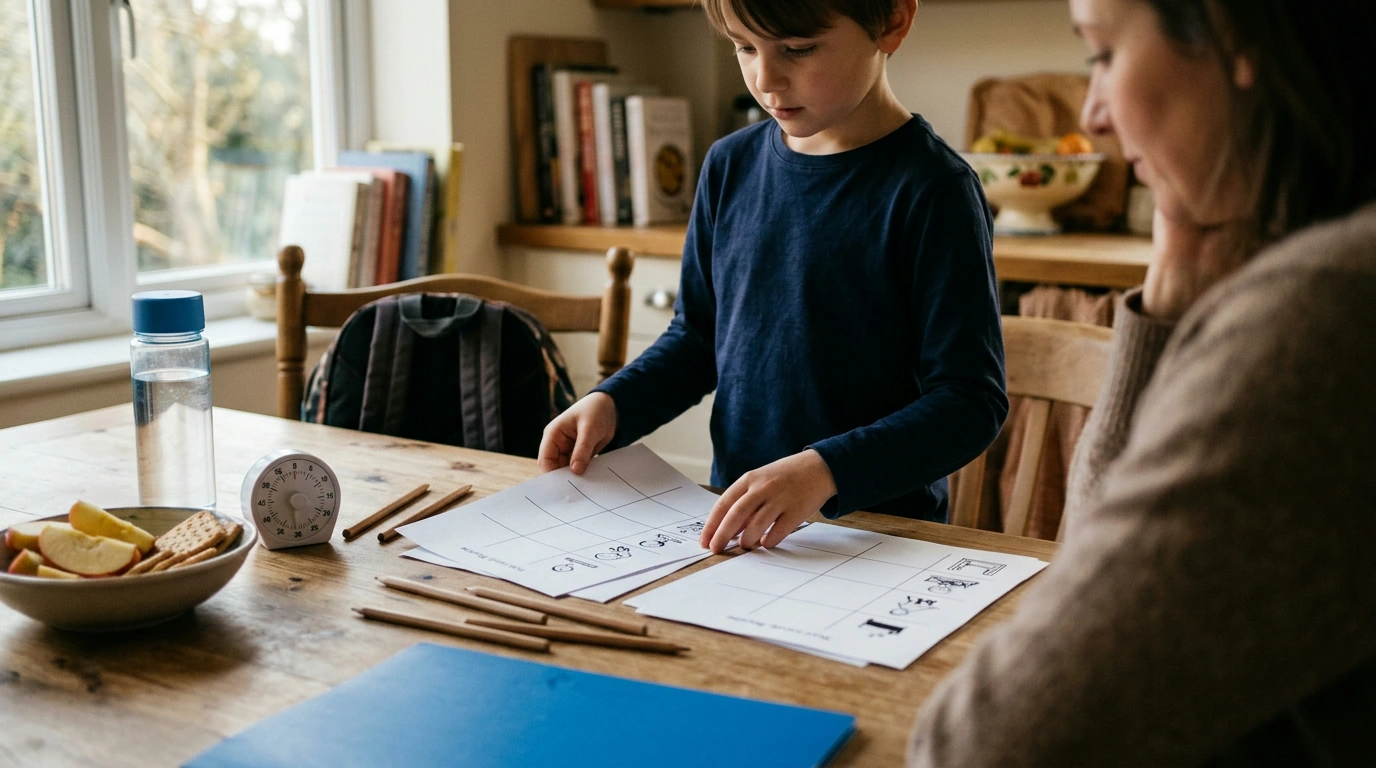
Homework Help Made Easy Toolkit for Parents: A Printable Plan for Study Habits and Independent Learning
Busy school nights run smoother with a simple, repeatable system: a clear workspace routine, a consistent homework flow, and kid-friendly tools that build independence. The goal isn’t to “do more”—it’s to make the same few steps happen the same way most nights, so kids know what to expect and parents don’t end up stuck in a cycle of reminders, re-checking, and last-minute stress.
Below is a practical approach to homework help that supports learning without taking over, plus an easy way to turn daily expectations into printable cues kids can follow on their own.
What “homework help” looks like when it actually helps
Effective homework help is less about rescuing and more about coaching. When support is predictable and short, kids build confidence and parents avoid hovering.
- Shift from rescuing to coaching: ask guiding questions, model one example, then fade support so the child practices independently.
- Focus on process over perfection: plan time, break tasks down, check understanding, and review—then stop.
- Keep help predictable: the same steps each day reduce arguments and decision fatigue.
- Use short check-ins: a 2–3 minute start-up check and a quick wrap-up beat hovering for an hour.
For additional, research-informed tips on supportive routines, see guidance from the American Academy of Pediatrics and the American Psychological Association.
Set up a homework routine that sticks (without a full household overhaul)
A routine only works if it’s realistic. Start with one “time anchor” and one main workspace, then build a short start line ritual that gets kids moving.
- Pick a consistent time anchor: after snack, after sports, or after dinner—choose what you can sustain most days.
- Create a start line ritual: water bottle filled, materials out, device notifications off, timer set.
- Limit workspace choices: one main spot and one backup spot prevents daily negotiation.
- Use a simple closeout: pack the bag, place completed work in the same spot, quick preview of tomorrow’s first step.
A simple nightly homework flow
| Step | What the child does | What the parent does | Time |
|---|---|---|---|
| 1) Start-up | Checks planner/portal, gathers materials, sets timer | Asks: “What’s first?” and confirms due dates if needed | 2–5 min |
| 2) Plan | Breaks assignments into mini-steps; chooses order | Helps estimate time; suggests easiest-first or due-first | 3–7 min |
| 3) Work blocks | Works in focused bursts with short breaks | Stays nearby but not hovering; redirects gently to the plan | 20–45+ min |
| 4) Check | Reviews directions, fixes obvious errors, confirms completion | Uses a brief checklist; asks one reflection question | 3–8 min |
| 5) Closeout | Packs materials; sets up tomorrow’s first step | Praises effort/strategy; signs or scans if required | 2–5 min |
Build study habits with small, teachable skills
Study habits are easier to learn when they’re broken into small skills you can practice for a week at a time. Keep the system simple so kids can repeat it without extra coaching.
- Planning: teach a “two-minute preview” (scan tasks, circle key directions, note needed materials).
- Time management: use a visible timer and a default break pattern (such as 20 minutes on/5 off; adjust by age).
- Note-taking: stick to one method (bullets + keywords + one summary line).
- Memory strategies: practice retrieval (close notes and recall), spacing (short sessions across days), and interleaving (mix problem types). Research-backed study approaches are summarized well at Edutopia.
- Organization: use one folder system and one consistent spot at home for returns/permission slips.
Homework strategies for common nightly problems
Independence: how to fade help without leaving kids stuck
For families who want extra support building a healthier response to mistakes (without shame spirals), the How to Learn and Grow from Mistakes – Digital Guide pairs well with a homework routine by reinforcing reflection and resilience.
Printable tools that reduce reminders and arguments
Toolkit spotlight: a ready-to-print system for homework nights
If creating all those pages from scratch sounds like one more task on an already-full list, a ready-to-print set can make the routine feel “plug and play.” The Homework Help Made Easy Toolkit for Parents – Printable Guide for Creating Study Habits, Homework Strategies & Independent Learning is designed to support consistent homework flow, stronger study habits, and gradual independence.
A realistic 7-day rollout plan
FAQ
What age range does a homework routine like this work for?
The same structure works from early elementary through middle school; the difference is how long the work blocks are and how much planning the child does. For younger kids, parents may read directions and set the timer; for middle school, kids can plan mini-steps and use a quick parent check-in at the start and end.
How long should homework take each night?
Follow teacher guidance when available, and prioritize quality over duration. If homework regularly runs far longer than your child can handle with focused effort (even with timers and breaks), it’s worth documenting the time spent and communicating with the teacher about adjustments.
How can parents help without doing the work for the child?
Use the prompt ladder: ask a question, point to directions, give a hint, model one example, and only then give an answer as a last resort. Keep help limited to brief check-ins and use a review checklist so the child owns the final work.










Leave a comment