Retractable Patio Awning (138×47) With Manual Crank
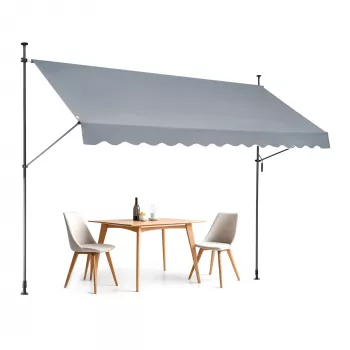
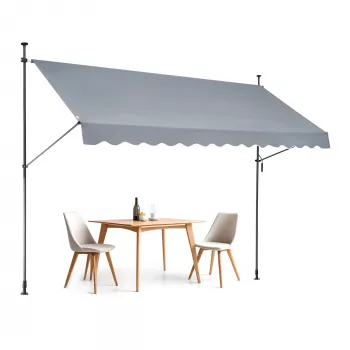
Flexible Shade for Patios, Doors, and Windows
A retractable patio awning is a practical way to add shade exactly when you want it—without committing to a permanent overhang that darkens your home all day. The 138″x47″ Retractable Patio Awning – Adjustable Sunshade with Manual Crank is sized to cover common residential targets like a patio door, a broad window span, or a compact balcony seating area. With manual, power-free control, you can extend the canopy during harsh sun and retract it when you want more daylight, improved airflow, or extra clearance.
Sun exposure also changes by season and time of day. Checking factors like the UV Index can help explain why the same spot feels comfortable one afternoon and intense the next—making adjustable shade a strong everyday upgrade.
What this awning is designed to do
- Create on-demand shade for outdoor seating, entryways, or window-adjacent areas.
- Reduce direct sun exposure on people and nearby surfaces during peak daylight hours.
- Offer quick retraction for changing weather or when unobstructed space is preferred.
- Provide a manual, power-free operation option that avoids wiring and motor maintenance.
Key features that matter day to day
- Manual crank operation: controlled extension and retraction without electricity, remotes, or batteries.
- Adjustable shade angle/pitch: helps block low-angle sun in the morning or late afternoon (where installation allows).
- Retractable design: retracting when not in use can help protect the canopy from unnecessary exposure.
- Wide coverage profile: 138″ of width works well over a single large opening (like a slider) or a small patio/balcony run.
If your outdoor area is exposed during high-heat days, pairing shade with smart timing matters, too. The National Weather Service overview of heat index is a helpful reference for understanding why even “moderate” temperatures can feel more oppressive in direct sun.
Dimensions and planning your coverage
Before ordering an awning, it’s worth planning for both the shaded footprint and the space needed to operate it comfortably. This model measures 138 inches wide with a 47-inch projection, meaning it can create a targeted patch of shade right where you sit, step outside, or get sun glare through glass.
- Match width to the target zone: when possible, allow a little extra coverage beyond the edges of a doorway or seating area to reduce side glare.
- Confirm extension clearance: make sure the awning can extend outward without contacting railings, light fixtures, gutters/downspouts, or door swings.
- Account for sun direction: west-facing areas often need stronger late-day shade, while south-facing spots may benefit from a more balanced pitch for midday coverage.
Sizing and placement checklist (quick reference)
| Item | What to verify | Why it matters |
|---|---|---|
| Awning size | 138″ (width) x 47″ (projection) | Determines the shaded footprint and edge-to-edge coverage |
| Mounting surface | Solid wall/framing available at mounting points | Helps prevent loosening and improves stability over time |
| Clearance | No obstructions along the extension path | Avoids contact damage to canopy and surrounding fixtures |
| Sun angle | Morning vs afternoon exposure | Guides pitch choice and best placement for comfort |
| Usage pattern | Retract during wind/rain when advised | Extends canopy life and reduces strain on brackets |
Materials, durability, and what affects lifespan
A retractable awning is a moving outdoor component, so longevity is influenced as much by use habits as by materials. Strong sun, frequent full-day exposure, and leaving the canopy extended when conditions shift can shorten service life. Retraction is one of the simplest ways to reduce UV wear and keep the canopy from acting like a sail in sudden gusts.
- Sun intensity matters: intense UV and high-heat exposure can fade and stress fabrics over time, especially when left open continuously.
- Mounting strength matters: bracket stability depends on the substrate (wood framing, masonry, or reinforced surfaces) and correct anchors/fasteners.
- Cleaning helps: regular rinsing and light cleaning reduces grime that can cause staining or degrade fabric and seams.
For a quick overview of why shade is still important even when it feels cooler outdoors, the Skin Cancer Foundation’s notes on shade and UV radiation offer useful context.
Installation notes to avoid common problems
Good installation is what makes daily operation feel smooth instead of finicky. The goal is a secure mount, a level alignment, and enough working room to crank comfortably.
- Measure twice: confirm width alignment and level placement so extension is smooth and even.
- Use the right anchors: masonry, stucco over masonry, and wood framing typically require different hardware choices.
- Plan crank clearance: make sure the handle can rotate without hitting railings, planters, or patio furniture.
- Test slowly after mounting: extend and retract fully at a controlled pace to verify even tracking and firm brackets.
Using the manual crank and adjusting shade
Manual operation is straightforward, but a few habits can make it feel easier while also reducing strain on the awning.
Best use cases around the home
Care, weather, and safety
In-stock picks at KeyCatch Mart
- 138″x47″ Retractable Patio Awning – Adjustable Sunshade with Manual Crank ($112.32)
- 18K Gold Custom Alphabet Initial Necklace ($12.51)
- Square Moissanite Diamond Stud Earrings ($42.67)
FAQ
Can the awning stay extended all the time?
It’s better to retract it when shade isn’t needed and during wind or stormy weather. Retracting helps protect the canopy from unnecessary sun exposure and reduces ongoing stress on the brackets and arms.
How do I know if the 138″ width will fit my space?
Measure the wall span where you plan to mount it and compare that to the shaded area you want to cover. Also confirm door/window clearance and verify you have solid mounting points across the width so the installation stays stable.
Is a manual crank hard to use?
Manual cranks are typically simple and power-free, letting you control extension at your own pace. Make sure you have enough clearance to rotate the handle comfortably, and extend/retract slowly for smooth operation.






Leave a comment