47.2in Folding Adjustable Wooden Dog Ramp for Beds & Cars
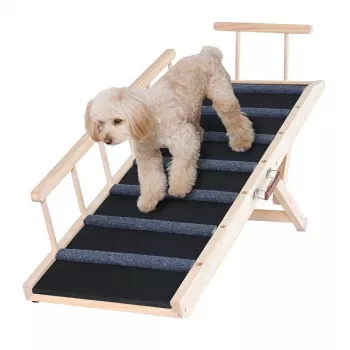
Folding Adjustable Wooden Pet Ramp for Small and Large Dogs (47.2″): Safe Access Made Simple
A sturdy ramp can take pressure off a dog’s joints by cutting down on repeated jumping, while also helping pets feel steadier when reaching beds, couches, and vehicles. The best ramps do three things well: they stay stable, offer reliable grip, and fit your everyday spaces without becoming a hassle to store. Below is a practical guide to what to look for—especially when one ramp needs to work for both smaller companions and bigger breeds. For more guidance, see 5 Foods You Can Use to Make Natural Make-Up With (and Why You ….
When a ramp helps most
- Senior dogs, dogs recovering from injury, or pets with arthritis that struggle with jumping
- Small dogs facing tall bed/couch heights and large dogs that risk joint strain from repeated impact
- Car and SUV loading where the drop height changes by parking surface or trunk configuration
- Pets that are nervous on stairs and do better on a wider, flatter surface
- Homes with slick flooring where controlled climbing feels safer than leaping
Joint wear and stiffness are common in aging dogs, and vets often recommend reducing high-impact activities like repetitive jumping when possible. For more background on canine arthritis and mobility, see these references from American Kennel Club and AAHA. For further reading, see How to Forage Puffball Mushrooms for Dinner – OneGreenPlanet.
What matters in a wooden, folding, adjustable ramp
- Length and angle: A longer ramp generally creates a gentler climb; adjustability helps match different furniture or vehicle heights.
- Traction: Look for a non-slip surface or tread that supports steady paw placement, especially for long-haired or older dogs.
- Side rails or raised edges: Helps prevent missteps, particularly for dogs with vision changes or low confidence.
- Hinge and fold quality: Stable hinges reduce wobble; a folding design makes storage easier without sacrificing rigidity.
- Weight rating and real-world stability: A ramp should feel solid under a dog’s full weight and movement, not just static standing.
- Floor and landing grip: Bottom feet should resist sliding on tile/wood floors, and the top should sit securely against the target surface.
Wood ramps are often chosen for their stiffness and “planted” feel underfoot. That said, the surface contact points matter just as much as the materials—if the top landing can drift or the base can skate on smooth floors, even a strong ramp can feel unsafe to a cautious dog.
Quick specs and fit guide for the 47.2″ folding adjustable wooden ramp
- Designed for everyday access to higher surfaces like beds, couches, and vehicles
- Folding build supports easier storage in closets, under furniture, or in a vehicle cargo area
- Adjustable height options help tailor the incline to the dog’s comfort level
- Wood construction emphasizes stiffness and a stable feel underfoot
Ramp fit checklist (measure before buying)
| What to measure | How to measure | Why it matters |
|---|---|---|
| Target height | Measure from floor to the top of the bed/couch/vehicle entry | Determines whether the ramp can be set to a workable incline |
| Available floor space | Measure the run-out area where the ramp will sit | Ensures the ramp can extend without blocking walkways |
| Dog size and stride | Note your dog’s shoulder height and comfort stepping up | Helps choose a gentler angle and adequate width |
| Surface type | Tile/wood/carpet/garage floor | Affects whether extra grip pads are needed under the ramp |
| Storage space | Measure trunk/cargo area or indoor storage spot | Confirms the folded ramp will fit when not in use |
Setting the right incline: comfort and confidence
- Start with the lowest usable height setting to create the gentlest slope, then increase only if needed for fit.
- For hesitant dogs, place the top landing securely against the surface and stabilize the bottom so it cannot slide.
- Use treats or a favorite toy to reward small steps; avoid pulling on a leash, which can increase fear.
- Add a non-slip mat under the base if used on smooth flooring.
- Check paw placement and gait: a dog should climb without scrambling, slipping, or rushing.
A simple confidence test: your dog should be able to pause mid-ramp, look around, and continue without losing footing. If the climb turns into a scramble, the incline is usually too steep, the traction is too smooth, or the base/landing isn’t locked in place.
Where this ramp fits best around the home and car
- Beds and couches: Reduces repeated jumping that can strain shoulders, elbows, hips, and back.
- SUVs and hatchbacks: Adjust the height to match the entry lip; use slow, consistent training sessions.
- Porches or small steps: Works for low-to-moderate rises when the surface is stable and the ramp is anchored.
- Travel and storage: Folding design helps keep the ramp accessible without taking over living space.
Care, safety checks, and long-term durability
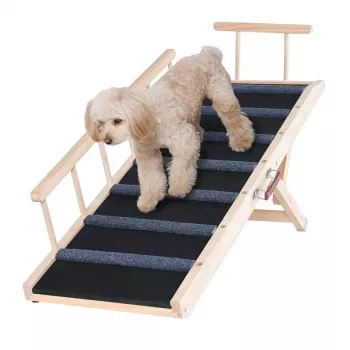
Product option: Folding Adjustable Pet Ramp for Small and Large Dogs – 47.2″ Wooden Ramp
Folding Adjustable Pet Ramp for Small and Large Dogs – 47.2″ Wooden Ramp
More in-stock picks (shop the store)
FAQ
How steep should a dog ramp be?
Aim for the gentlest incline that still reaches your target height, starting with the lowest usable adjustment. If your dog slips, rushes, or hesitates, reduce steepness and improve traction and base stability.
Will a wooden ramp work for large dogs?
Yes—if it’s stable, has reliable traction, and is rated for your dog’s weight. Make sure the top landing is secure against the surface and the base won’t slide on smooth floors.
How do you train a dog to use a ramp without fear?
Use short, low-pressure sessions with treats and calm repetition. Begin with the ramp at a low height, reward one step at a time, and avoid forcing or pulling, which can make the ramp feel unsafe.








Leave a comment