Best Multi-Level Cat Tree: Posts, Caves & Perches
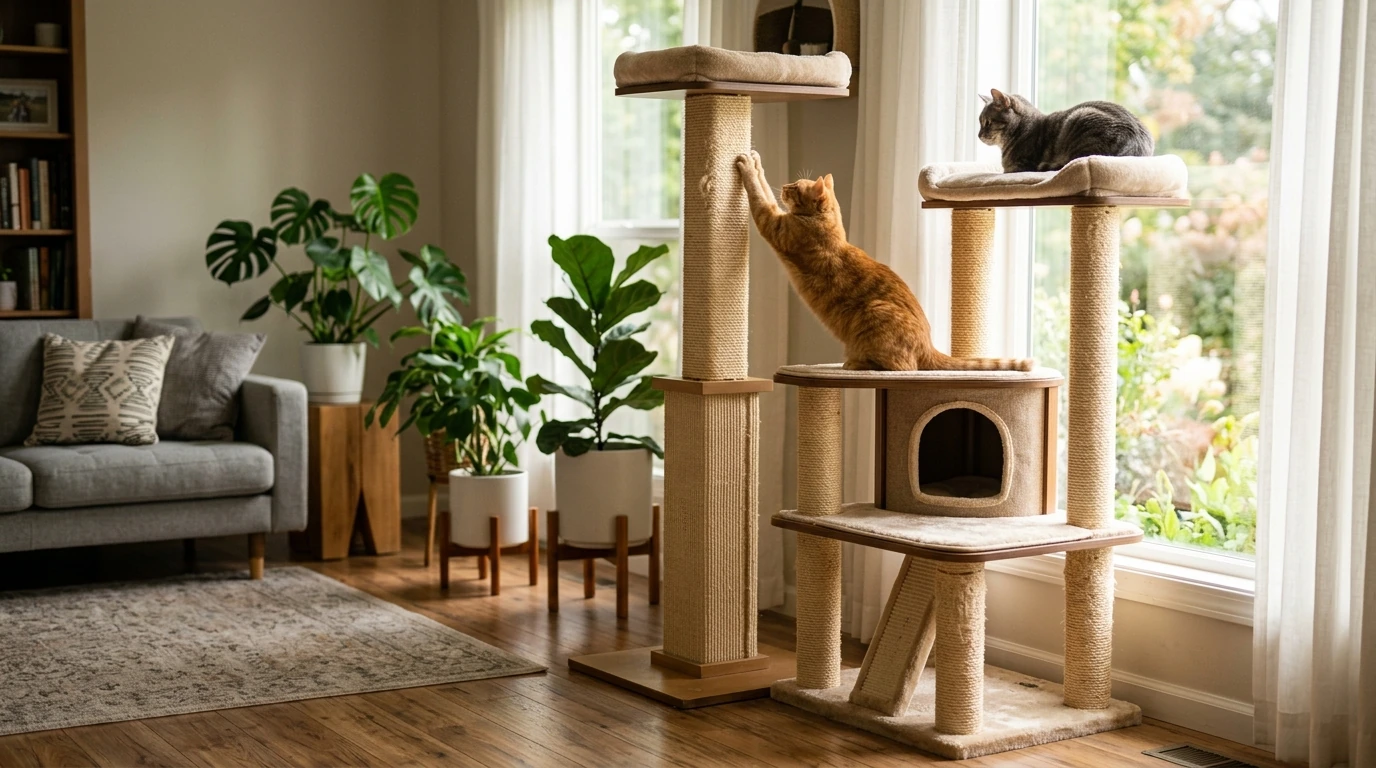
A tall, multi-level cat tree can turn unused vertical space into a daily routine of climbing, scratching, perching, and hiding—especially helpful for indoor cats who need more movement and calm spaces. The right setup gives cats “up-high” routes, a safe place to decompress, and a dedicated spot to scratch (instead of your sofa). Below is a practical guide to choosing features that matter, placing the tree so cats use it every day, and keeping it stable and easy to maintain.
Why a multi-level setup works for indoor cats
- Supports natural behaviors: climbing, surveying from above, scratching, and napping in enclosed spaces all happen naturally when cats have vertical territory.
- Encourages bite-sized exercise: frequent short climbs and hops add up—often more realistic than expecting one long play session.
- Creates “traffic lanes” off the floor: elevated paths can reduce tension in multi-pet homes by giving cats alternate routes past each other.
- Offers choice: open perches provide visibility, while caves/condos offer quiet retreat. That flexibility can support calmer daily routines.
For a deeper look at why enrichment and safe spaces matter, see the American Association of Feline Practitioners (AAFP) environmental needs guidelines.
Key features to prioritize: posts, caves, and perches
Scratching posts
- Prioritize height: cats scratch with their whole body. A taller post supports a full stretch and can make the tree more satisfying than furniture.
- Look for multiple scratching zones: more than one post (or multiple scratchable surfaces) helps prevent one cat from monopolizing the “best” spot.
- Match texture to preference: many cats love sisal-style surfaces; others prefer carpet-like fabric. If possible, choose a tree that offers at least one clearly scratch-friendly material.
For behavior tips that pair well with a cat tree, the ASPCA’s guide to scratching behavior is a helpful reference.
Caves/condos
- Enclosed hideouts help nervous cats: a covered space can lower stress by giving cats control over their exposure.
- More than one hide space can reduce guarding: in multi-cat homes, an extra cave or condo can prevent one cat from “owning” the only enclosed spot.
- Check entry size and seams: openings should be smooth and roomy enough for comfortable turns, without loose fabric or exposed hardware.
Perches and platforms
- Staggered platforms create stepping-stones: cats feel confident when routes are obvious and jumps are predictable.
- Top perch = lookout zone: a stable high perch near a window becomes a daily favorite for “patrol” time.
- Bed feel and traction both matter: plush is cozy, but platforms should still provide grip for quick jumps and tight turns—especially for kittens and older cats.
More enrichment ideas (beyond the cat tree) are available from International Cat Care.
Stability and safety checks before buying
- Base footprint: a wider, heavier base improves stability for bigger cats and energetic jumpers.
- Post thickness and joint strength: sturdy uprights and secure connectors reduce wobble as cats launch, land, and twist.
- Platform spacing: steps should be reachable without risky leaps. If a cat hesitates, it may stop using upper levels altogether.
- Materials and finishing: avoid exposed staples, sharp edges, or loose seams—especially around cave openings and platform corners.
Size and feature checklist (quick comparison)
Use this checklist to match a cat tree to your space, your cat’s size and mobility, and your household dynamics. When possible, aim for at least one scratching zone per cat and at least one quiet retreat option.
| What to check | Good for | Simple guideline |
|---|---|---|
| Tall scratching posts | Cats that scratch furniture or need a full stretch | Posts tall enough for full extension; more than one post reduces competition |
| Multiple caves/condos | Shy cats, multi-cat homes, nap-heavy cats | At least one enclosed hideout; two is better if cats don’t share well |
| Staggered perches | Climbers, window-watchers, playful cats | Platforms arranged like steps; top perch placed away from unstable edges |
| Wide, heavy base | Large cats and high-energy jumpers | Wider footprint and low center of gravity; consider anchoring for extra safety |
| Surface grip and cleanability | Kittens, seniors, allergy-sensitive homes | Non-slip feel on platforms; vacuum-friendly fabric and reachable corners |
Where to place it for daily use (and fewer messes)
Getting cats to actually use it
Care and upkeep to keep it stable and fresh
Product picks (in stock)
- Large multi-level cat tree with scratching posts, caves, and perches — A vertical, all-in-one option designed to combine climbing levels, scratching zones, enclosed caves, and elevated perches in one footprint.
- 18K Gold Custom Alphabet Initial Necklace — A simple personalized gift idea for cat parents (or anyone who wants an everyday initial necklace).
FAQ
How tall should a scratching post be on a multi-level cat tree?
A good post is tall enough for your cat to fully stretch from shoulders to hips while scratching. If you have multiple cats, having more than one scratching post or surface helps reduce competition and can make furniture less tempting.
Is a cave better than an open bed for indoor cats?
Caves provide a secure retreat that can help cats rest and decompress, especially in busy homes. Open perches and beds support observation and “watching” behavior, so having both options gives cats better choice and comfort.
Where is the safest place to put a tall cat tree?
A corner or wall-adjacent spot with a clear landing zone is typically safest and feels more stable to cats. Check for wobble after assembly and tighten hardware regularly, especially if your cat launches onto upper platforms.









Leave a comment