Fast Calm Tools: Mindfulness & Habits for Anxiety Relief
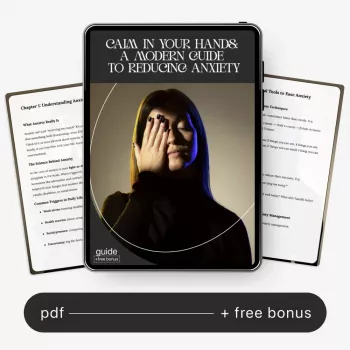
Calm in Your Hands: A Modern Guide to Reducing Anxiety
Anxiety can show up as racing thoughts, tightness in the body, restless sleep, or a constant sense of pressure. Practical skills—used consistently—can help the nervous system settle and make stressful moments feel more manageable. This guide-style resource focuses on mindfulness-based tools, simple routines, and long-term habits that support steadier calm over time.
What Anxiety Feels Like (and Why It Sticks Around)
Anxiety isn’t “just in your head.” It often arrives as a full-body signal: rapid heartbeat, shallow breathing, stomach discomfort, irritability, difficulty concentrating, and persistent “what if” thinking. These sensations are tied to the body’s stress response—designed to protect you—but it can become overactive when stress is chronic, recovery is limited, or the brain learns to treat everyday uncertainty like danger.
A helpful pattern to notice is the loop that keeps anxiety going: trigger → body alarm → worried thoughts → avoidance or reassurance seeking → short relief → stronger next alarm. The relief is real, but it teaches the nervous system that the trigger was a threat, so the next alarm comes faster.
If symptoms feel medically urgent or include panic attacks, ongoing impairment, self-harm thoughts, substance dependence, or anything that feels unsafe, professional support is the right next step. Reputable overviews include the National Institute of Mental Health and the American Psychological Association.
What “Calm in Your Hands” Helps You Practice
The aim isn’t to eliminate anxious thoughts on command; it’s to build repeatable skills that help you downshift when anxiety rises and reduce how often you reach overload. A structured approach can make practice simpler on days when motivation is low.
- Mindfulness techniques for quick downshifting during stressful moments
- Body-based skills that release tension and restore a sense of control
- Short reflection prompts to reduce rumination and build healthier thinking habits
- Long-term routines that prevent overload instead of only reacting to stress
- Digital format benefits: instant access, easy revisiting, and quick sessions when time is limited
For a step-by-step toolkit you can revisit anytime, explore Calm in Your Hands: A Modern Guide to Reducing Anxiety (digital eBook).
Fast Calm: 5–10 Minute Techniques for Surges of Anxiety
When anxiety spikes, the goal is to send the body a clear “safe enough” signal. Small shifts—especially in breathing, muscles, and attention—can reduce intensity quickly.
Breathing reset (comfortable, no forcing)
Try lengthening your exhale slightly longer than your inhale. A longer exhale can cue the body’s calming response. Keep it gentle; if breathwork increases distress, switch to grounding or muscle release.
Grounding with the senses
Name what you can see, feel, hear, smell, or taste. This pulls attention out of catastrophic future scenes and back into present-moment data.
Progressive muscle release
Tense and soften major muscle groups (jaw, shoulders, hands, stomach, legs). Anxiety often sends “alarm” through tension; releasing it interrupts the signal.
Labeling thoughts
Briefly name the pattern—“catastrophizing,” “mind-reading,” “future-tripping”—then return to the next concrete task. The label creates distance without arguing with the thought.
Emergency plan script
Use the same short sequence each time: pause → breathe → anchor → choose one next step. Repetition matters more than perfection.
| Technique | Best for | How long | Small cue to remember |
|---|---|---|---|
| Long-exhale breathing | Racing heart, agitation | 2–5 minutes | Exhale a little longer than inhale |
| 5-sense grounding | Spiraling thoughts, derealization | 2–4 minutes | Name 5–4–3–2–1 |
| Muscle release | Jaw/shoulder tension, restlessness | 5–8 minutes | Tense then soften |
| Thought labeling | Rumination, “what if” loops | 1–3 minutes | Name the pattern, return to now |
| Mini-walk + attention cue | Stress buildup, stuck energy | 5–10 minutes | Feel feet; notice 3 details |
Mindfulness That Fits Real Life
Micro-practice beats “perfect practice.” A few short check-ins stacked throughout the day can build stability more reliably than waiting for the ideal 30-minute session.
- Pick a simple anchor: breath, feet on the floor, sounds in the room, or one physical sensation.
- Expect distraction: the mind wandering is normal, not a failure.
- Use the real method: notice → gently return → repeat. Progress is the repetition.
- Pair it with habits: morning drink, commute, handwashing, or right before opening messages.
For some people, a small physical reminder helps cue the habit. A personal piece like an 18K Gold Custom Alphabet Initial Necklace can become a discreet “return to the present” anchor—touch it, feel its weight, and take one longer exhale.
Long-Term Stress Relief: Habits That Lower the Baseline
Fast tools help in the moment, but baseline habits reduce how often your system hits red alert. Think of it as making calm easier to access.
If anxiety often shows up as self-criticism after setbacks, building resilience skills can help you recover faster. Consider pairing your calming practice with How to Learn and Grow from Mistakes (digital guide) to reduce shame spirals and keep momentum.
Building a Simple Weekly Plan (So Calm Becomes Consistent)
Choosing a Digital Guide That Actually Helps
For a straightforward toolkit you can open whenever you need it, Calm in Your Hands is designed around quick techniques plus routines that lower your baseline over time.
FAQ
How fast can mindfulness techniques reduce anxiety?
Some people notice a drop in intensity within minutes when using breathing, grounding, or muscle release. Steadier, longer-term relief typically comes from consistent daily practice over weeks.
What if breathing exercises make anxiety feel worse?
Switch to non-breath tools like 5-sense grounding or progressive muscle release, and keep breathing natural rather than forced. If panic is frequent or worsening, discussing symptoms with a clinician can help tailor safer strategies.
Can a digital guide replace therapy for anxiety?
Self-guided tools can be very useful for skill-building and day-to-day regulation. Therapy or medical care is recommended when symptoms are severe, persistent, or interfere with work, relationships, sleep, or safety.







Leave a comment