Rolling 16-Slot Garden Tool Organizer for Garage
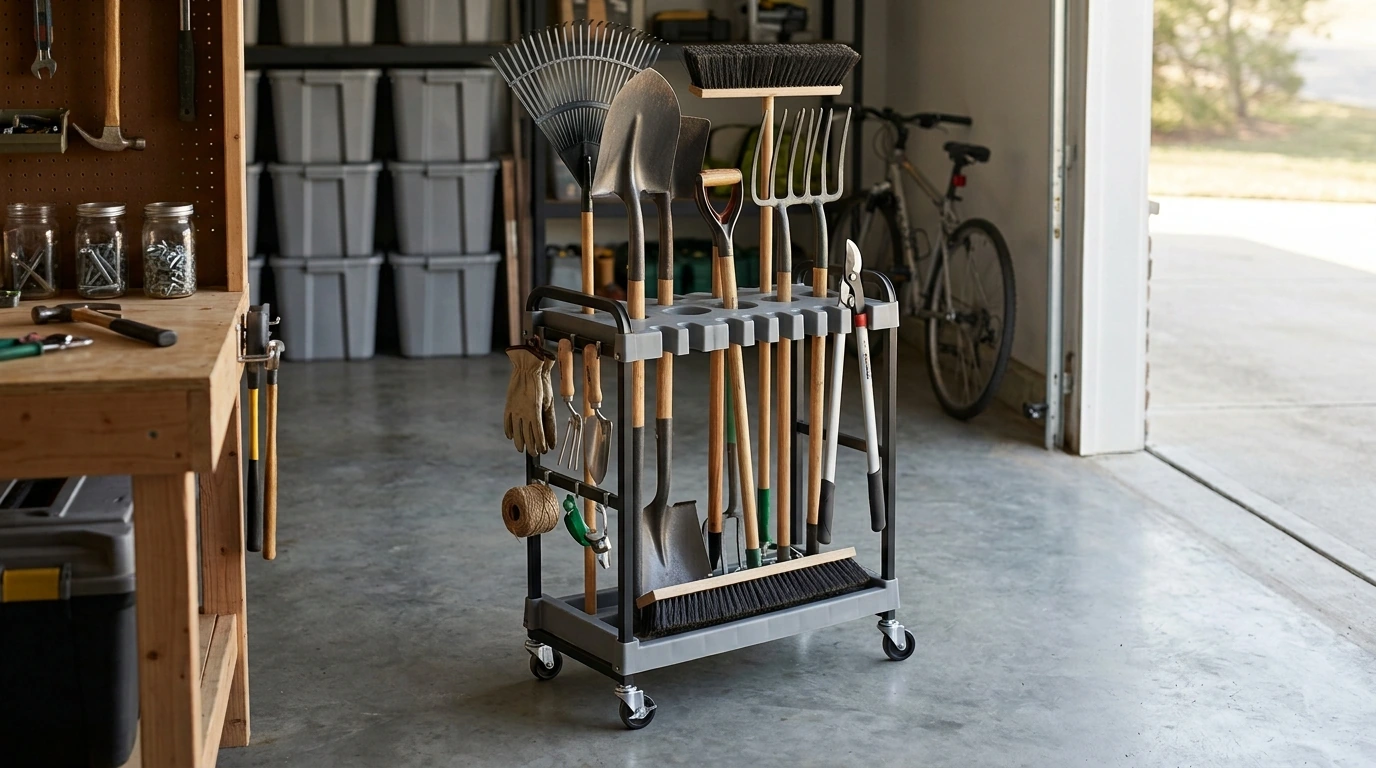
16-Slot Garden Tool Organizer with Hooks and Wheels for Garage Storage
A tidy garage starts with a system that keeps long-handled tools upright, small gear off the floor, and everything easy to roll where it’s needed. This 16-slot organizer combines dedicated tool bays, integrated hooks, and lockable mobility to turn one corner of the garage into a reliable home base for garden and yard equipment.
What This Organizer Solves in a Busy Garage
When tools don’t have a clear home, they drift—into corners, behind bins, or into a leaning pile that’s hard to sort and easy to knock over. A rolling organizer with defined slots and hooks turns “somewhere in the garage” into one consistent return spot.
- Prevents long-handled tools (rakes, shovels, brooms) from sliding into a pile or leaning dangerously against walls.
- Creates a single “parking spot” for frequently used items so tools return to the same place every time.
- Uses vertical storage to free up floor space for bins, bikes, and seasonal gear.
- Keeps smaller accessories accessible using hooks rather than scattered across shelves or workbenches.
- Adds mobility so the whole tool station can move for cleaning, reorganizing, or working near the driveway.
That last point matters more than it sounds: a stand that rolls can be positioned where you’re actually working, then tucked back into its lane so the garage stays functional for storage and parking.
Key Features to Look For (and Why They Matter)
16 separated slots for long-handled tools
Slots help prevent the classic “handle tangle,” where tool heads hook onto each other and everything comes out at once. With 16 slots, you can separate tools by task and by handle thickness, which keeps the setup calm and predictable.
Integrated hooks for the small stuff
Hooks keep the easy-to-lose items visible: gloves, pruners, hand trowels, and corded accessories. When those items live on hooks instead of on a shelf, you’re less likely to set them down “for a second” and lose them for a week.
Wheels with locks for mobility and stability
Rolling storage shines in garages that double as workshops, gyms, or car parking. Wheels make it easy to shift the station out of the way, but locking casters are what make it feel safe when you’re pulling heavier tools in and out—especially on smooth concrete or epoxy flooring.
Compact footprint that fits real garages
A good organizer earns its keep by staying out of the way. The right footprint fits along a wall, near the yard door, or beside a workbench without blocking the most common traffic lines.
At-a-Glance Specs and Buying Checklist
Before choosing a spot and loading it up, think about your tool mix and how the garage is used day to day.
- Best for: garages, sheds, covered patios, and utility rooms with mixed tool sizes.
- Tool mix: long-handled tools in slots; smaller items on hooks.
- Mobility: choose rolling storage when the space is shared with vehicles or multi-use zones.
- Stability: prioritize a wide base and locking wheels when storing heavier tools.
- Setup: plan placement near the most-used entry point to the yard for better habits.
Quick Comparison: What to Check Before Placing an Organizer in Your Garage
| What to check | Why it matters | Practical tip |
|---|---|---|
| Slot count and spacing | Prevents tool handles from competing for the same space | Group by handle thickness; reserve a few slots for future tools |
| Hook placement | Keeps smaller items visible and off the floor | Hang frequently used items at chest height for easy grab-and-go |
| Wheel quality and locks | Makes moving easier and keeps the stand from drifting | Lock wheels before loading or unloading heavier tools |
| Footprint vs. traffic flow | Avoids blocking doors, cars, or narrow walkways | Leave a clear lane to the yard door and main storage shelves |
| Surface contact (floor type) | Stability differs on epoxy, concrete, or mats | If using mats, ensure casters roll smoothly and locks hold firmly |
Tool Layout Ideas That Keep Everything Easy to Find
Where It Fits Best: Garage, Shed, or Patio
Organized spaces are also safer spaces. For general guidance on keeping areas clean and navigable, see OSHA’s housekeeping recommendations. For everyday safety and fall prevention, the CDC’s fall prevention guidance is a useful reference—especially in garages where cords, tools, and wet floors can create hazards.
Care, Safety, and Long-Term Use
Product Option Available Now
If you want one rolling station that handles both long-handled tools and small accessories, 16-Slot Garden Tool Organizer with Hooks and Wheels for Garage Storage is in stock and well-suited for mixed garage setups where tools need to be easy to grab, easy to return, and easy to move.
- How to Learn and Grow from Mistakes – Digital Guide | how to grow from mistakes Mindset, Self-Growth & Resilience eBook for Personal Development
- 18K Gold Custom Alphabet Initial Necklace (a simple gift option for the gardener who just upgraded their space)
FAQ
How many tools can a 16-slot organizer actually hold?
The 16 slots typically refer to long-handled tool positions, so capacity depends on handle thickness and tool head size. The integrated hooks add extra room for smaller accessories like gloves, pruners, and cords, often increasing the total number of items you can store.
Do the wheels need to lock on a tool organizer?
Locking casters are strongly recommended because they keep the organizer stable while you pull out or return heavier tools. On smooth garage floors, locks help prevent drifting and reduce the chance of a tip or sudden roll.
Where should a rolling tool organizer be placed in a garage?
Place it near the yard entry door or beside a workbench so tools naturally return to the same spot after use. Keep it clear of car doors and main walk paths, and avoid damp areas where water can collect to help reduce rust on metal tools.








Leave a comment